How to Start Day Trading Futures with Prop Firm Capital and a Live Trading Room
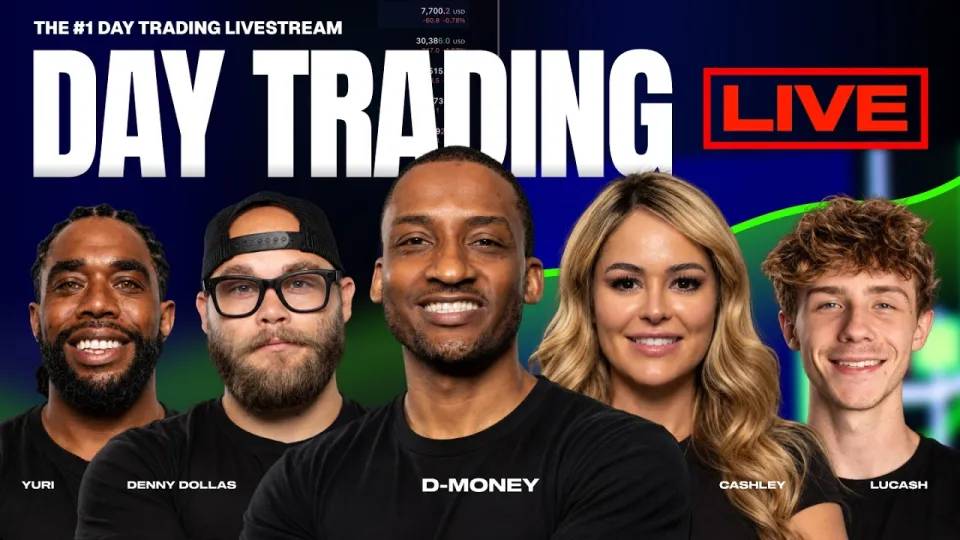
Video: LIVE DayTrading! #1 Watched Futures Trading Show!
Want articles like this for your own video to promote it on YouTube and Google? Order them through the Telegram bot @sat_sit_bot. The bot writes and publishes the articles itself (with your YouTube video embedded) on popular topical websites (no ads). Free trial — 50 articles.
Key takeaways
- Prop firm accounts let retail traders control $50,000–$150,000 in futures buying power for a monthly fee instead of risking personal savings.
- Top-ranked prop firms in the OnlyPropFirms list include Lucid Trading, TakeProfitTrader, Apex Trader Funding, Tradeify, and Legends Trading.
- Futures markets trade nearly 24 hours on CME Group platforms, with ES, NQ, and CL among the most liquid contracts for day trading.
- A typical funded-account rule set requires a profit target, a daily loss limit, and a trailing or static drawdown before you can withdraw.
- The Patrick Wieland trading course sells for $99 and covers the same strategy he trades live on the BDH stream every trading day.
Day trading futures with prop firm capital means you pay a monthly evaluation fee, prove a repeatable edge on a simulated account, and then trade the firm's money under strict risk rules. The fastest path is to pick one liquid contract, follow a written plan, and sit in a live trading room until the setup becomes boring. This guide breaks down how that process works, what it costs, and where beginners usually blow up.
What day trading futures actually requires from you
Day trading futures is the business of buying and selling standardized contracts like the E-mini S&P 500 (ES), Nasdaq (NQ), or crude oil (CL) inside a single session, aiming to capture small moves with leverage. Unlike stocks, futures trade nearly 24 hours a day on CME Group venues, so you are never stuck waiting for an opening bell. That flexibility is exactly why so many retail traders migrate from equities to futures — and why prop firms built an entire industry around funding them.
The barrier is not intelligence, it is capital and discipline. A single ES contract controls roughly $250,000 of notional value with a few thousand dollars of margin, so a 10-point move is $500 in either direction. One careless trade can wipe a small personal account. Prop firm capital solves the capital half of that equation; it does nothing for the discipline half.
Before you spend a dollar, decide three things: which contract you will trade, what time window you will trade it, and what your maximum loss per day is. Traders who skip this step are the ones leaving comments asking which setup to buy.
How prop firm funding works in practice
A prop firm gives you access to a simulated account with a profit target and a drawdown limit. Pass the evaluation, and you get a funded account where you keep a percentage of profits — typically 80% to 90% — while the firm absorbs the downside. You never deposit the full account size; you pay an evaluation or activation fee, usually between $50 and $300 depending on account size.
Here is the standard sequence:
- Choose a firm and an account size. A $50,000 account is the most common starting point because the fee is low and the rules are forgiving enough for a beginner.
- Read the rulebook twice. Profit target, maximum daily loss, trailing drawdown, consistency rules, and news-trading restrictions vary wildly between firms.
- Trade the evaluation with the same size you plan to use when funded. Oversizing to pass faster is the single most common reason traders fail.
- Request payout after the minimum trading days and profit threshold are met. Most firms process the first payout within a few business days.
The firms most frequently ranked at the top of the OnlyPropFirms list include Lucid Trading, TakeProfitTrader, Apex Trader Funding, Tradeify, and Legends Trading, followed by BluSky Trading, TradeDay, and MyFundedFutures. Each has different drawdown mechanics, so compare them on rules rather than on marketing.
Building a repeatable trading strategy before you go live
A trading strategy is a written set of conditions that tells you when to enter, where to place your stop, and where to take profit — with no room for improvisation. Without it, you are gambling with extra steps. With it, you have data you can review and improve.
Most futures day traders build around one of three approaches:
- Liquidity and market structure. This is the ICT-style framework: identify prior highs and lows, wait for a sweep of liquidity, then trade the reversal or continuation. It works best on ES and NQ during the New York open.
- Opening range breakout. Mark the high and low of the first 15 to 30 minutes, then trade the break with a stop on the opposite side of the range.
- Mean reversion. Fade extended moves back toward a moving average or volume-weighted price during low-volatility sessions.
Whichever you choose, backtest it on at least 100 trades before risking real money. Track win rate, average win, average loss, and maximum consecutive losses. If the strategy cannot survive a 10-trade losing streak on paper, it will not survive one with money on the line.
Patrick Wieland teaches the strategy he trades live on stream through a two-hour course priced at $99, available at onlypropfirms.com/2-hour-trading-course. That is a reasonable reference point if you want to see how a professional structures entries and exits rather than guessing from clips.
Why a live trading room accelerates the learning curve
The BDH Day Trading Floor streams live every trading day from South Florida and California, with Patrick Wieland, Damareous Young, Lucas Kennard, and Denny Jones trading futures in real time. Watching someone manage a position through a drawdown teaches more than a hundred recorded wins, because you see the hesitation, the sizing decisions, and the exits that do not go as planned.
A live room gives you three things a course cannot:
- Real-time context. You hear why a trade was taken, not just where.
- Accountability. Knowing others are watching your process makes you less likely to break your own rules.
- Community answers. Questions about setups, platform settings, and firm rules get answered by people who are actually trading.
That said, a live stream is not a signal service. Copying entries without understanding the reasoning behind them is how traders blow accounts during someone else's bad week. Use the room to study process, not to outsource decisions.
Common beginner mistakes and how to avoid them
Most blown accounts follow the same script, and the pattern is predictable enough to avoid. The most frequent mistakes in futures day trading are:
- Trading too many contracts on a small account. One NQ contract can move $400 in minutes; two contracts turn a normal losing trade into a rule violation.
- Ignoring the daily loss limit. Hitting the limit once is survivable. Hitting it three days in a row usually ends the evaluation.
- Revenge trading after a loss. The market does not know you are down, and it will not give the money back because you are angry.
- Trading news events without checking firm rules. Many prop firms restrict trading around FOMC, CPI, and NFP releases.
- Switching strategies after two losing days. No edge works every session; abandoning a plan before it has a sample size guarantees you never find out if it worked.
A simple fix for most of these is a pre-trade checklist taped next to your monitor: contract, direction, entry, stop, target, and maximum loss for the day. If a trade does not fit the checklist, it does not get taken.
Choosing a platform and tools that fit futures trading
Futures traders need a platform that supports CME data, DOM (depth of market) trading, and one-click order entry. The most common choices are TradingView for charting, NinjaTrader for execution and backtesting, and Sierra Chart for traders who want raw order flow. Brokerage and data feed costs typically run $50 to $150 per month depending on the exchange fees you need.
A workable starter stack looks like this:
- Charting on TradingView with ES and NQ on a 5-minute and 1-minute timeframe.
- Execution through the prop firm's preferred platform, which is often NinjaTrader or Tradovate.
- A trade journal — spreadsheet or dedicated app — logging every entry with a screenshot.
- A news calendar to avoid accidentally trading into a major release.
Keep the stack small. Traders who collect indicators instead of reviewing their own trades rarely improve, because the problem is almost never the tool.
The bottom line on getting funded and staying funded
Getting funded is a process, not a lottery ticket: pick a firm whose rules match your style, trade one contract until the plan is automatic, and treat every evaluation like a job interview you have to pass on merit. The traders who last are the ones who survive their worst week without breaking a rule, not the ones with the biggest single-day win. If you want to see that discipline in action, the Patrick Wieland channel streams the BDH floor live every trading day and shows both the wins and the mistakes. Start small, log everything, and let the sample size tell you whether your edge is real.
Source: LIVE DayTrading! #1 Watched Futures Trading Show! · Markdown version
Questions & answers
What setup is used in the live futures trading stream?
The stream focuses on intraday futures setups built around market structure and liquidity — identifying prior highs and lows, waiting for a sweep, and trading the reaction on ES and NQ. The exact entry and exit rules are taught in the two-hour course Patrick Wieland sells for $99. Watching the live stream shows how those rules are applied in real time, including the trades that fail.
Where can I buy the setup that Patrick Wieland trades?
The strategy is available as a two-hour course at onlypropfirms.com/2-hour-trading-course for $99. It covers the same framework used on the live BDH stream, so you can compare what you learn against what you see traded. Buying a setup does not replace screen time — you still need to backtest it and trade small before scaling up.
How much money do I need to start day trading futures with a prop firm?
You do not need the full account size, only the evaluation or activation fee, which typically ranges from $50 to $300 for accounts between $50,000 and $150,000. Add platform and data feed costs of roughly $50 to $150 per month. The real investment is time: most traders need several months of consistent practice before passing an evaluation.
Which prop firms are considered the best for futures traders right now?
The OnlyPropFirms rankings list Lucid Trading, TakeProfitTrader, and Apex Trader Funding at the top, followed by Tradeify, Legends Trading, BluSky Trading, TradeDay, and MyFundedFutures. Rankings shift as firms change drawdown rules and payout terms, so compare the current rulebooks before buying an evaluation. Discount codes and detailed reviews are aggregated at OnlyPropFirms.com.